Choosing your first snowboard can feel like rocket science – length, width, shape, profile, flex, plus dozens of brands and models. In reality, all you need is to understand a few basic parameters and you’ll know exactly what to look for. In this article, we explain how to choose the right snowboard based on your build, skill level and riding style. From board size to flex, so that you spend as much of your time on the slope riding as possible and as little as possible battling unsuitable gear.
What your choice of snowboard depends on
When choosing a snowboard, several interrelated parameters come into play: the length and width of the board, its shape and profile (bend), its stiffness (flex) and, finally, the riding style you want to focus on. On top of that, you need to take into account your height, weight, foot size and level of experience.
If you’re a complete beginner, there’s no need to get lost in all this. For your first board, three things matter most: the right size, a rather softer flex and a versatile shape that forgives mistakes. You can fine-tune everything else once you discover which riding style you enjoy most. Let’s go through the individual parameters one by one.
How to choose the right snowboard size
Snowboard size is absolutely crucial when choosing a board – the wrong length or width can spoil even the best day on the slopes. And size isn’t just about the length of the board, but its width too.
Snowboard length by weight and height
Although snowboard length was traditionally determined by height (a board stood on its tail should reach somewhere between your chin and nose), your weight is actually the more important indicator. The board flexes under the rider, and it’s weight that determines how it will perform. A lighter rider on a board that’s too long and stiff won’t be able to “get it working”, while a heavier rider on a short snowboard loses stability.
A simple rule applies: a shorter board is easier to handle, turns more readily and forgives mistakes – which makes it ideal for beginners and for freestyle. A longer board is more stable at higher speeds and floats better in deep snow, so it’s better suited to freeride. As a beginner, you’re better off going for the shorter end of the recommended range.
Snowboard size chart by height and weight
This table will help you get your bearings quickly (the values are approximate; a specific snowboard model may differ):
| Height (cm) | Weight (kg) | Approximate board length (cm) |
|---|---|---|
| up to 150 | up to 50 | 128 – 136 |
| 150 – 160 | 50 – 60 | 133 – 143 |
| 160 – 170 | 60 – 70 | 139 – 149 |
| 170 – 178 | 70 – 80 | 145 – 155 |
| 178 – 185 | 80 – 90 | 150 – 159 |
| over 185 | over 90 | 156 – 165 |
Snowboard width by boot size
Board width is often overlooked, yet it’s just as important as length. Your foot in its boot should sit on the board so that the toe and heel only slightly overhang the edges – that way you can tilt and control the snowboard effectively. If your boots overhang too much, your toe or heel will drag in the snow when turning and the board will slide out from under you (known as toe drag or heel drag). If, on the other hand, they sit too far in, you lose leverage for controlling the edges.
As a general rule: if you wear boots up to roughly size 44 – 45 (EU), a standard-width snowboard will suit you. If you have bigger feet, go for a wider model labelled “wide”, which has enough room and helps you avoid toe drag.
Snowboard shape and profile
While length and width determine the size, shape and profile determine how the board behaves on the slope. They sound complicated, but the principle is simple.
Board shape – directional, twin and directional twin
The shape describes how the board is laid out around its centre:
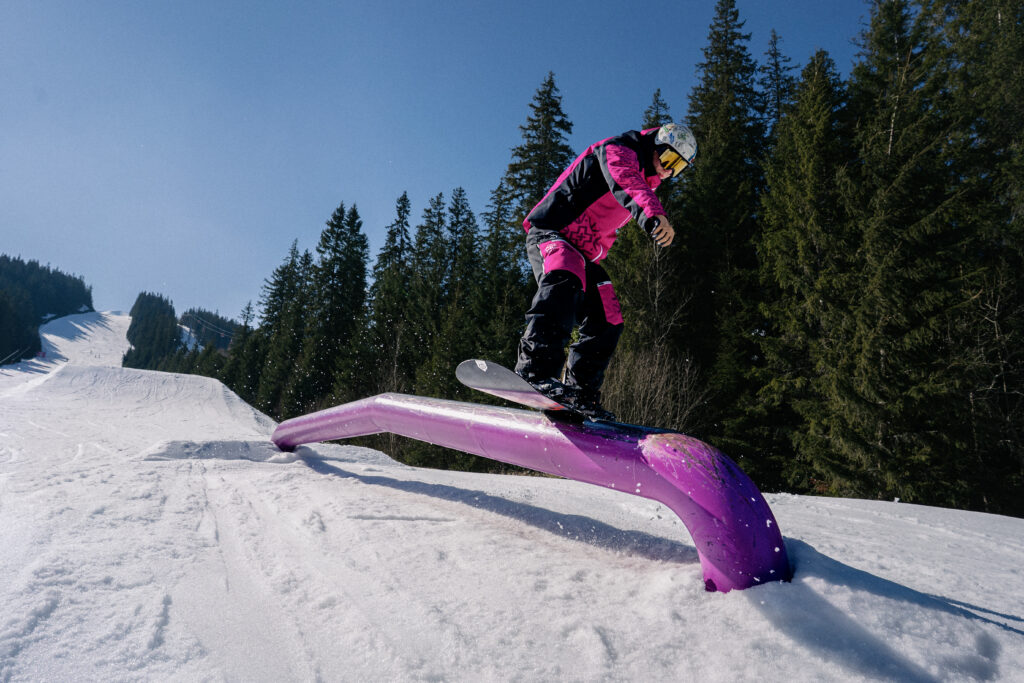
- Twin (bidirectional) is symmetrical – the nose and tail are identical and the snowboard rides equally well in both directions. Ideal for freestyle and riding “switch” (in the opposite stance).
- Directional (single-direction) is built for riding in one direction, usually has a longer nose and is designed more for freeride and fast riding on the slopes.
- Directional twin is a compromise between the two – an all-rounder that can handle everything from the park to the whole mountain. For beginners and versatile riding, a twin or directional twin is the safest choice.
Profile (bend) – camber, rocker, flat and hybrid
The profile is the curvature of the snowboard when you look at it from the side:
- Camber (classic bend) arches upwards in the middle and touches the snow towards the ends. It holds an edge superbly and feels “lively” when carving, but it requires more precise technique – better suited to advanced riders.
- Rocker (reverse camber) is bent the opposite way, like a banana – the middle touches the snow and the ends are raised. It’s less prone to catching an edge, so it forgives mistakes, is easier to get the hang of and floats brilliantly in powder. For beginners, this type of snowboard is usually the most comfortable.
- Flat (zero camber) is somewhere in between and offers a stable, predictable ride.
- Hybrid combines camber and rocker in a single board to bring together the advantages of both – edge hold as well as forgiveness. For your first all-round board, a hybrid or rocker is a great choice.
Flex – snowboard stiffness
Flex expresses how stiff the board is, or in other words, how easily it bends. It’s usually given on a scale from soft to stiff (often as a number from 1 to 10).
A softer snowboard is easier to control, more forgiving of mistakes and more tolerant while you’re learning – which is why we recommend it to beginners, and it’s also popular in freestyle, where you need to “play” with the board. A stiffer board stays stable at high speeds and is more precise when carving, but it requires more confident technique and more strength – advanced riders and freeriders will appreciate it. If you’re choosing your first snowboard, go for a soft to medium flex; it will give you the most fun and the fewest falls.
Choosing a snowboard by riding style
Once you’re clear on the parameters, the last question is where and how you want to ride. Based on this, boards are divided into three main categories.
All-mountain
All-mountain snowboards are all-rounders that can handle groomed slopes, a bit of powder and the occasional jump in the park. They are the most common type and the best choice for beginners and most recreational riders – with one board, you can cover almost everything.
Freestyle
Freestyle (park) snowboards are built for tricks, jumps and riding in the snow park. They tend to be shorter and softer and have a twin shape, so you can land and ride in both directions. If obstacles and the halfpipe appeal to you, this is your category.
Freeride
Freeride snowboards are designed for riding off groomed slopes, in deep snow and more challenging terrain. They are longer and stiffer and have a directional shape that holds its line and floats in powder. They are specialist boards for more experienced riders who spend their time off-piste.
Men’s, women’s and kids’ snowboards
Snowboards are made in men’s, women’s and kids’ versions, and it’s not just about the design. Women’s boards are usually softer, narrower and lighter, as they are adapted to a lower average weight and smaller foot size – which is why they generally suit women better than men’s models. Kids’ snowboards are chosen primarily based on the child’s height and weight and tend to be very soft, so that young riders can easily learn the basics. If you’re choosing a board for your partner or child, it’s worth going for the version designed for that particular category.
Before your first ride: bindings, boots and stance
The snowboard is only one part of the setup. For it to serve you well, you also need well-fitting bindings and boots – and all three components should have matching stiffness (softer bindings and boots for a soft board, stiffer ones for a stiff board). The boots are the most important: they must hold your foot firmly without pinching, because it’s through them that you transfer your movements to the snowboard. The bindings, in turn, must match the boots in both size and type.
Before your first ride, it’s useful to find out which foot you’ll have in front. If you lead with your left foot (right foot at the back), you ride what’s known as regular; if you lead with your right, it’s a goofy stance. A handy tip: imagine you’re sliding across a frozen puddle, or that someone gives you a gentle push from behind – the foot you step forward with will usually be your leading foot. It’s not rocket science, and your instructor will help you fine-tune it right in your first lesson.
It’s best to try a snowboard out
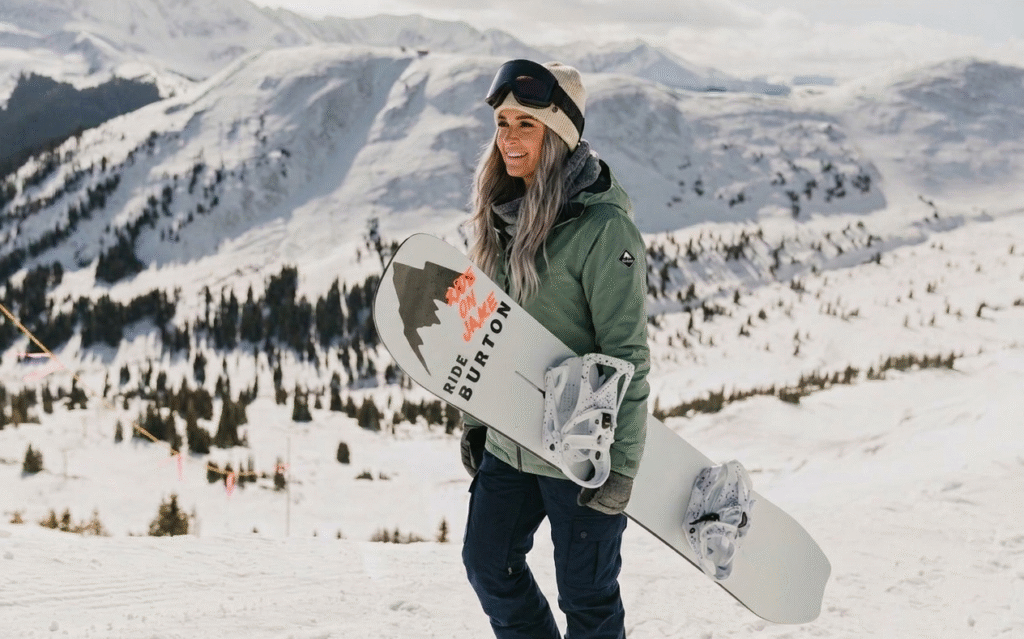
Even with the best size chart, specs on paper can’t replace the real feel underfoot. That’s why, with your first snowboard, it’s ideal to rent a board and try it out first – you’ll find out which length and stiffness suit you before you invest in your own. At the Snowflake Academy rental shop you’ll find Burton snowboards in all sizes and categories, all serviced and ready for the slopes, and you can easily swap the size or model if your first choice doesn’t suit you.
And if you’re just starting out with snowboarding, the quickest and safest way is to start with a snowboard instructor. They’ll teach you the correct stance, weight transfer and how to stop right from the start, so you’ll avoid bad habits and master your first turns faster than you expect. A similar principle applies to skiing – we’ve covered how to go about it in our article how to learn to ski as an adult.