Ski touring is one of the fastest-growing winter sports – and it’s not hard to see why. Instead of queuing for a lift, you climb the hill under your own steam, in the silence of the snow-covered mountains, and your reward is a descent through untouched snow that regular skiers never get to. If you’re tempted to give it a go, this article is for you: it will walk you through what ski touring actually is, what gear and touring skis you need, how to master the basic technique and, above all, how to start safely.
What is ski touring and why try it
Ski touring (known in Slovakia as skialp or, more formally, skialpinizmus) is a combination of hiking and skiing. On special skis fitted with climbing skins, you climb uphill under your own power and then ski back down. If you have the experience, this can also mean leaving the groomed slopes behind and skiing through off-piste terrain. You don’t need drag lifts or cable cars – you get to the top on your own strength, and on the way down your reward is fresh snow.
Why do people do it? There are several reasons. It’s the freedom and silence you won’t find on crowded slopes. It’s moving through nature and a great way to build fitness – the climb gives your body a proper workout. And finally, it’s that feeling when you draw your tracks across an untouched slope you “earned” on your own two feet. Any recreational skier in decent shape can manage ski touring; what matters is that you can ski down safely even away from perfectly groomed runs, since the snow in off-piste terrain tends to be variable.
Ski touring gear: everything you need
Ski touring gear differs from regular downhill gear in one key way: it has to handle both the climb and the descent. That’s why it’s lighter and designed so you can move uphill with it. Here’s an overview of everything that belongs in a complete ski touring kit.
Touring skis
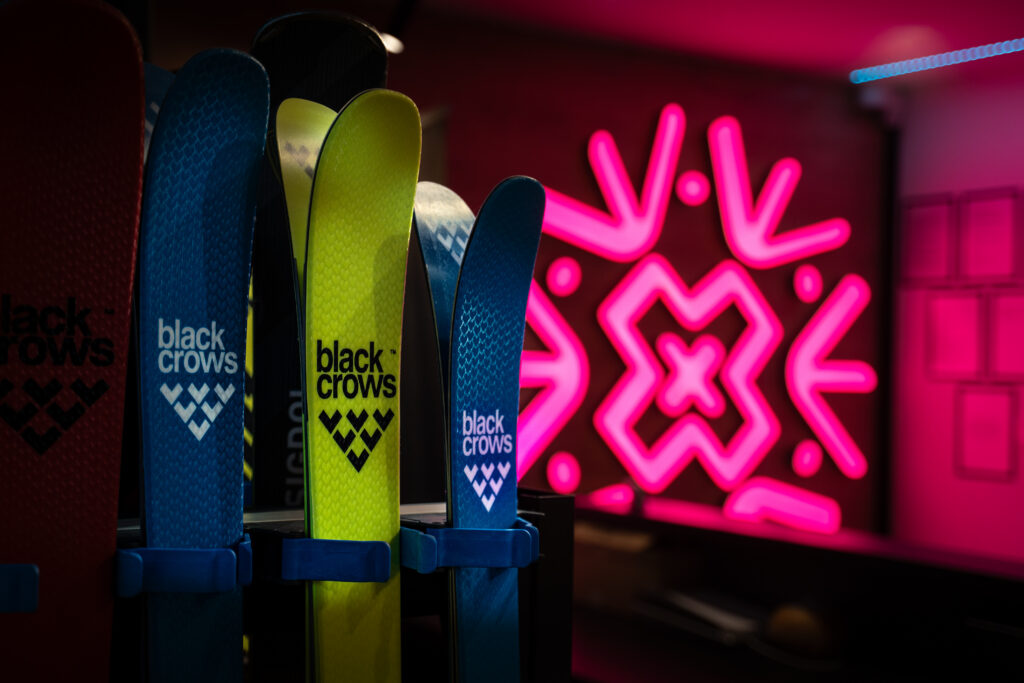
Touring skis are the foundation. Compared with regular downhill skis, they’re significantly lighter and usually narrower, because you’ll feel every extra gram on the way up. At the same time, they have to be versatile enough to carry you safely down through all kinds of snow. Touring skis come in different widths – narrower, lighter models are built for long ascents, while wider ones handle more snow on the descent. For a beginner, a versatile mid-width ski that performs well both uphill and downhill is ideal.
Ski touring bindings
Ski touring bindings (often called pin or tech bindings) have two modes. In walk mode the heel is free, so the ski rolls naturally with each stride just like when you walk, while the toe stays clipped in. Before the descent you lock the heel and the binding behaves like a regular alpine binding. They usually also come with heel risers – small supports you flip up on steeper climbs so your calves don’t tire out on the way up.
Ski touring boots
Ski touring boots are lighter and more flexible than downhill boots and have a switch between walk mode and ski mode. In walk mode your ankle flexes freely, which makes climbing easier; before the descent you flip the boot into ski mode and it stiffens up. Boots are what make or break your comfort, so give them as much attention as your skis when choosing.
Climbing skins
Climbing skins, usually just called “skins”, are strips with fine hair (mohair, nylon or a blend of the two) that you stick onto the base of the ski. The hair is angled so the ski glides forward but can’t slide backwards – which lets you climb up a slope without slipping back. Before the descent, you simply peel the skins off and fold them up.
Avalanche gear (essential)
This isn’t an optional extra – it’s mandatory equipment for anyone heading into off-piste terrain. The basis is the avalanche trio: an avalanche transceiver (beacon), a probe and a shovel – and, above all, the ability to use them. Add a backpack, ideally one with an airbag, which increases your chances of staying on the surface if you’re caught in a slide. You can round out your kit with telescopic poles, ski crampons (harscheisen) for icy terrain, goggles and a helmet.
Clothing
When ski touring, you’ll sweat on the way up and freeze on the way down, so rely on layering and ventilation. Functional thermal base layers, a breathable mid-layer and a light waterproof jacket that you can unzip or take off on the climb are the basics. Pack a dry T-shirt to change into and a warm layer for the summit, where it’s often windy and cold.
One practical tip to start with: don’t buy all the gear straight away. Ski touring equipment is an investment, and until you find out whether the sport suits you and what style you prefer, it makes much more sense to rent a complete ski touring set and have it professionally adjusted.
Ski touring technique: how to climb and how to ski down
Ski touring technique has two parts – the ascent and the descent – with a short transition in between. You’ll grasp the basics quickly, but they’re best refined under the watchful eye of someone more experienced.

The ascent
When climbing, you don’t lift the ski – you slide it forward over the snow, which saves energy and lets the skins do their job. Keep a steady, calm rhythm you can sustain for a long time, and don’t try to climb too fast. When the slope gets steeper, flip up your heel risers to take the strain off your calves.
Kick turns on switchbacks
You don’t climb a steeper slope head-on, but diagonally, in switchbacks. At the end of each switchback you have to change direction with a so-called kick turn – turning 180 degrees on the spot. You do it by moving one ski at a time; at first it feels clumsy, but after a few attempts you’ll be doing it smoothly. This is exactly the move worth practising on gentle terrain first.
The transition from ascent to descent
Once you reach the top, a quick changeover of your gear for the descent awaits: you peel off the skins, switch the bindings to ski mode (lock the heel) and switch your boots from walk to ski. It takes a moment, and in winter it pays to do it quickly and methodically so you don’t get needlessly chilled at the summit.
The descent
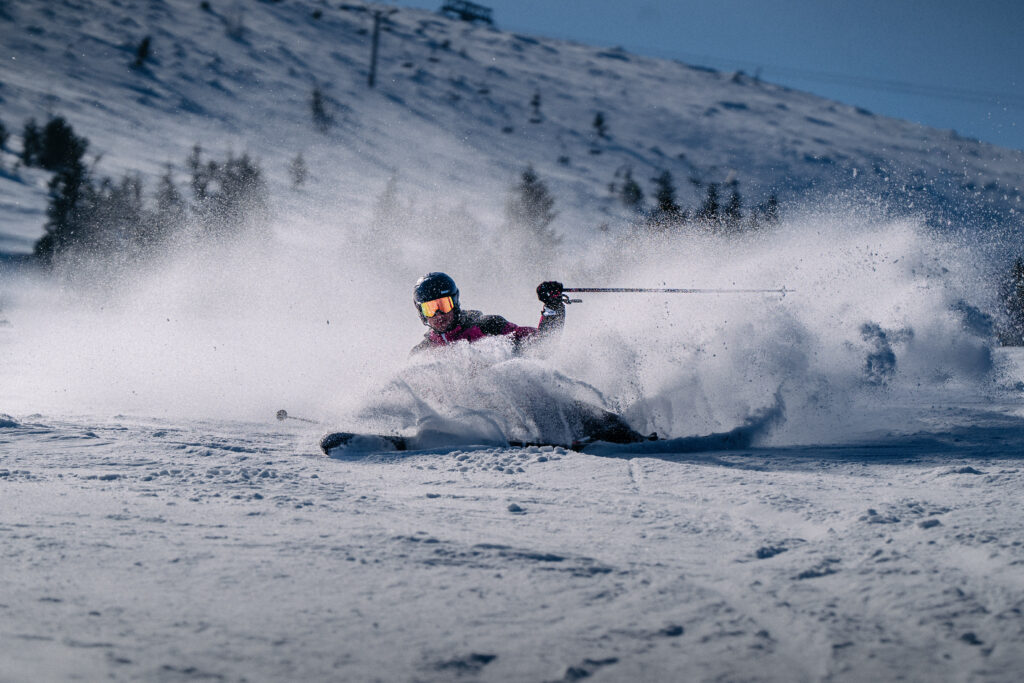
Skiing down off-piste terrain is different from skiing a groomed slope. The snow is often variable – from light powder through heavy wet snow to hard firn or bumps – and you have to react to it. Ski with something in reserve, read the terrain ahead of you and don’t attempt anything you don’t yet have the technique for. This is where it becomes clear why it’s good to be a decent skier first.
Safety and avalanches: what matters most
However tempting ski touring may be, remember one thing above all else: it means moving through open avalanche terrain, where different rules apply than on a patrolled slope. Safety is therefore not a topic you can skip.
Before every tour, check the current avalanche forecast (in Slovakia it is issued by the Avalanche Prevention Centre of the Mountain Rescue Service) and the weather forecast. Never go alone – ideally head out with a partner, a group, or an experienced instructor or mountain guide who knows the terrain. Carry avalanche gear and, above all, know how to use it; every member of the group should have searching with a transceiver, probe and shovel down pat. If you’re serious about ski touring, take an avalanche course – it will teach you to read the terrain, assess risk and make the right decisions.
And respect both your own limits and the mountains. The Low Tatras, with Chopok and Ďumbier, are beautiful ski touring terrain, but they are also avalanche-prone – just because a track leads somewhere doesn’t mean it’s safe on that particular day.
How to get started with ski touring (first steps)
If ski touring appeals to you, there’s no need to plan a demanding climb into the wild mountains right away. Instead, take it step by step:
- Learn to ski well first. Confident skiing, even in poorer, ungroomed snow, is the foundation ski touring is built on.
- Do your first climb at a ski resort, on a marked or permitted ski touring route. It’s a much safer environment for learning the technique than heading straight into off-piste terrain.
- Head out with an instructor or guide. They’ll show you how to handle the gear, how to climb efficiently and what to watch out for – saving you plenty of mistakes and risk.
- Rent your gear at first and have it adjusted. Learn the basics before you invest in your own.
- Start with short, gentle tours and increase the difficulty gradually as your fitness and confidence grow.
Try ski touring safely with Snowflake
If you want to try ski touring in Jasná or the Low Tatras, start out the surest way. At the Snowflake Academy rental shop you can rent a complete ski touring set – skis, bindings, boots and skins – serviced and adjusted to fit you, so you don’t have to worry about a thing. And instead of venturing into off-piste terrain blind, head out with an instructor who will guide you through your first climb and descent and show you the basics of avalanche safety. If your skiing technique isn’t quite solid yet, our guide on how to learn to ski as an adult will help too. The mountains will wait – what matters is heading into them prepared.