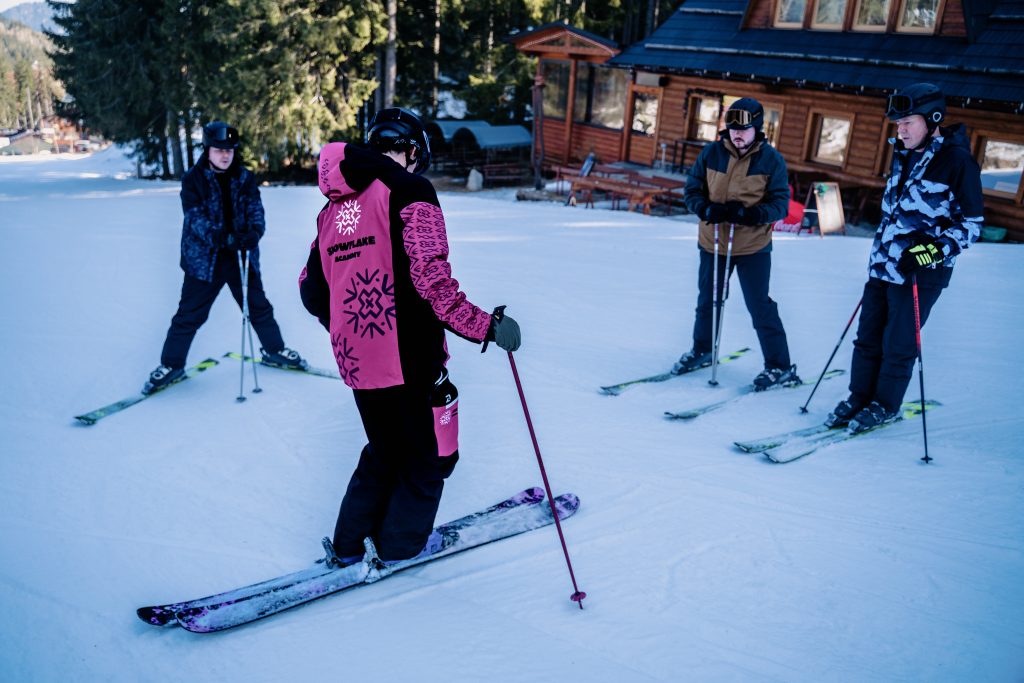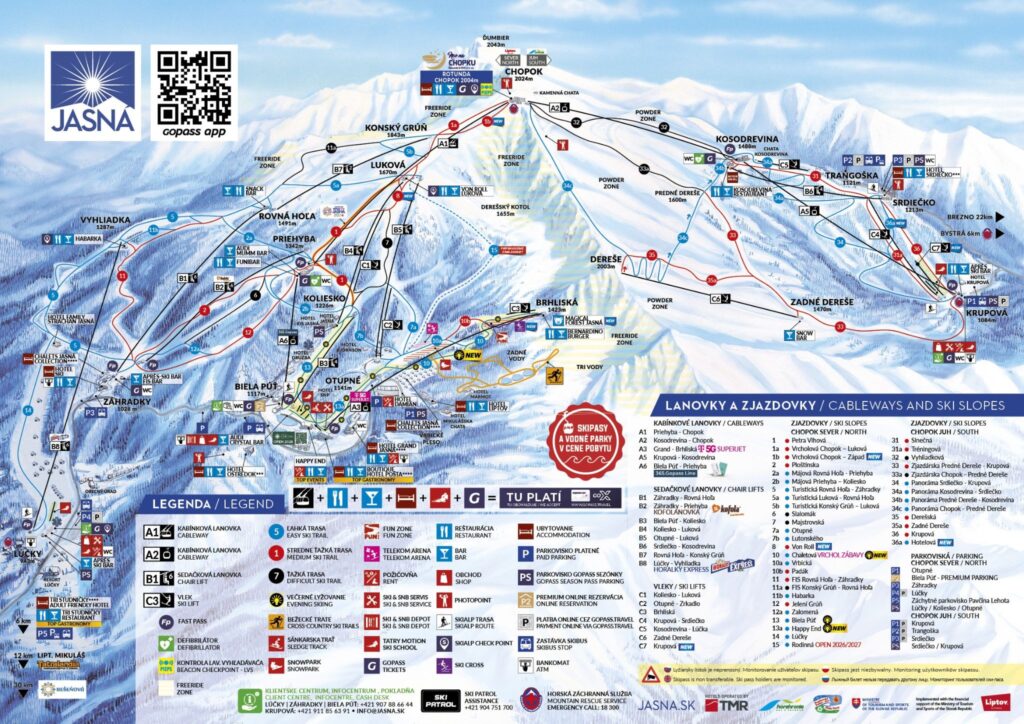


Choosing the right ski clothing is just as important as selecting high-quality skis or mastering your technique. The weather in our mountains—especially in a resort like Jasná—can change on a dime. You might experience freezing temperatures and biting winds in the morning, bright sunshine at noon, and heavy, wet snow by the afternoon. In fact, you can easily find yourself basking in the sun on one side of the mountain, only to be blasted by a freezing gale on the other.
That is why at the SNOWFLAKE ACADEMY ski school, we don’t just teach our students skiing technique; we also show them how to dress for the conditions so they stay dry, warm, and completely free to move. In this article, we will break down the absolute essentials of dressing for a great day on the mountain.
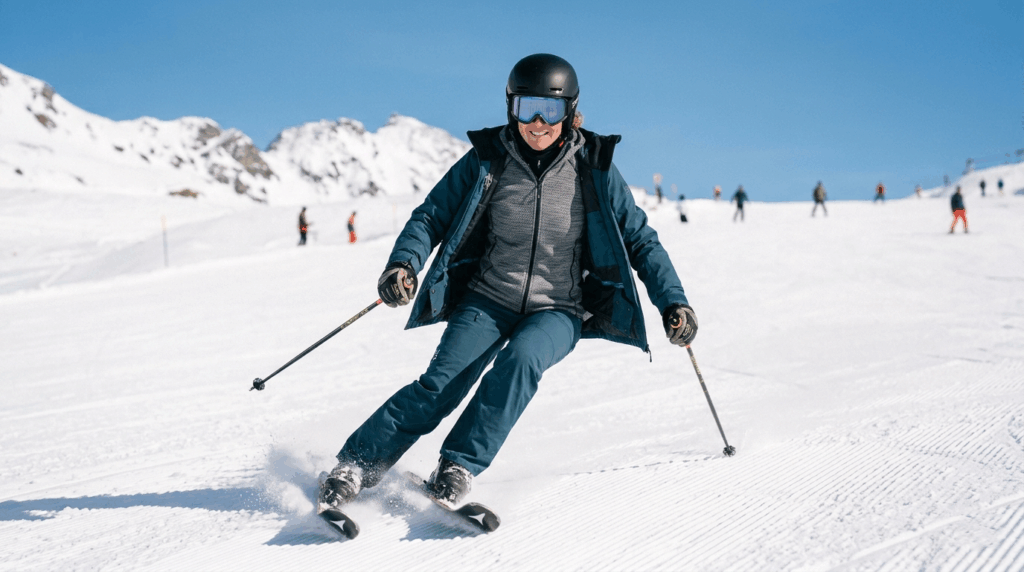
The golden rule of ski comfort: The three-layer system
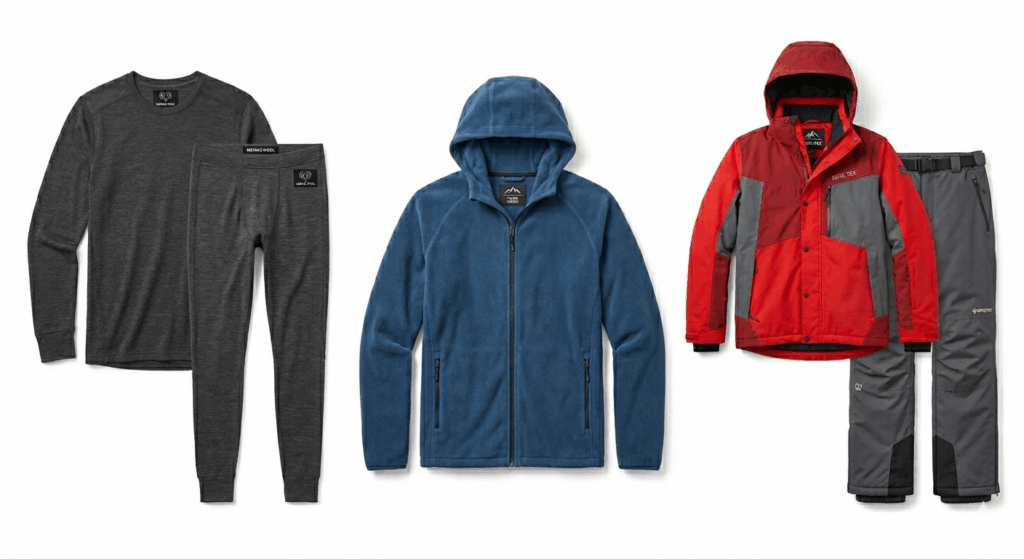
The secret to staying comfortable on the slopes is layering. Instead of wearing one thick, heavy jacket, it is far more efficient to use multiple thin, functional layers. This allows you to add or shed layers throughout the day depending on how hard you are skiing and what the weather is doing. Each layer has a specific job, and together they create a system that keeps you dry, warm, and comfortable.
- First layer (base layer): Wicks sweat away to keep you dry.
- Second layer (mid-layer): Traps body heat to keep you warm.
- Third layer (outer shell): Shields you from snow, rain, and wind.
1. The base layer (thermal underwear)
This layer sits directly against your skin, and its primary job is to wick moisture away from your body. If moisture gets trapped on your skin, you will chill down incredibly fast.
Your best options are:
- Merino wool: Naturally antimicrobial, meaning it won’t stink even after a full day of hard charging. It is also an excellent temperature regulator—it stays warm even when damp and feels incredibly soft against the skin.
- Synthetic materials (polyester): A fantastic choice for high-energy, active skiers. Synthetics dry significantly faster than wool and offer excellent stretch and flexibility.
What to avoid: Stay far away from cotton. It absorbs sweat like a sponge and stays wet, leaving you shivering and uncomfortable.
2. The mid-layer (insulation)
The job of the second layer is to create a pocket of air that traps your body heat. Since skiing involves spending a fair amount of time sitting still on chairlifts, a solid insulating layer is non-negotiable.
The most common choices include:
- Fleece or merino hoodies: A lightweight fleece pullover or a thin merino wool turtleneck provides plenty of warmth while allowing moisture from your base layer to pass right through.
- Packable down or synthetic jackets: These thin, insulated jackets fit easily under your ski coat and are a lifesaver on bitter, sub-zero days.
3. The outer layer (ski jacket and pants)
Your outer shell is what stands between you and the wind, snow, and wetness. This is where it truly pays to invest in quality – look closely at the fabric’s technical membrane (such as Gore-Tex or Dermizax).
Key features to look for in ski pants and jackets:
- Waterproofing: Look for a waterproof rating of at least 10,000 mm. This will easily handle standard snowfall and moisture. For harsh, stormy conditions, 20,000 mm is ideal.
- Breathability: When you are moving dynamically, your gear needs to “breathe” (at least 10,000 g/m²/24h) so you don’t end up sweating out your jacket from the inside.
High-end membranes like Gore-Tex are perfect because they combine top-tier waterproofing with excellent breathability. For extra comfort on the snow, make sure your jacket features a powder skirt, an adjustable hood, fully taped seams, and pit zips for ventilation.
Don’t skimp on ski accessories and protection
Even the smallest pieces of gear have a massive impact on how your day turns out.
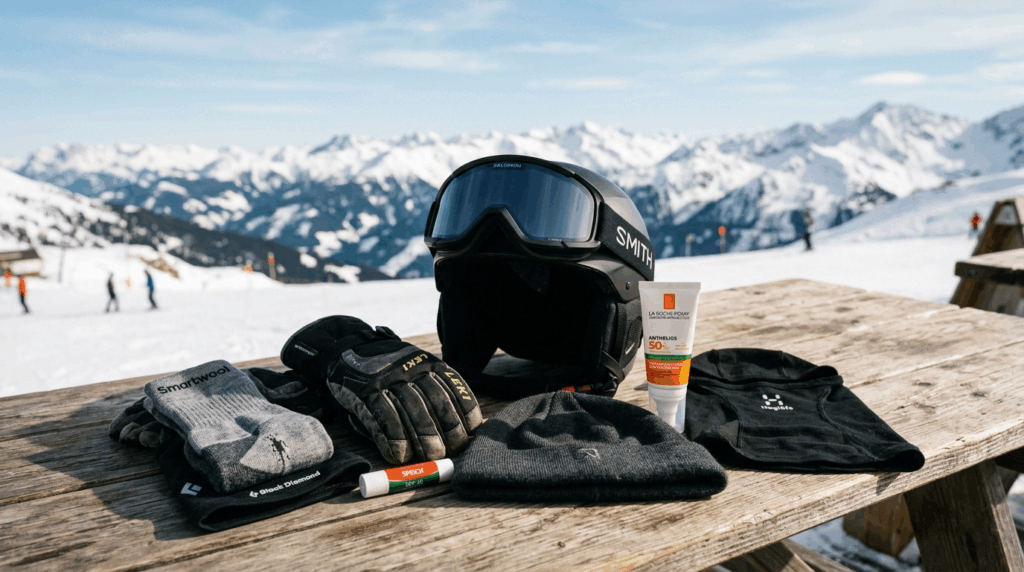
- Ski gloves: Standard gloves offer better dexterity, while mittens provide maximum warmth. Whichever style you prefer, make sure they are fully waterproof.
- Hats or balaclavas: Opt for a thin profile (ideally merino wool) so it fits comfortably under your helmet without bunching up.
- Ski goggles: Essential for protecting your eyes from wind, snow, and blinding high-altitude UV rays (look for 100% UV protection). Different lens tints will help you read the terrain in changing light conditions.
- Sunscreen: Never hit the slopes without a high-SPF sunscreen. The sun reflecting off the snow can cause intense sunburns, even on completely overcast days.
Caring for your ski outerwear
To make sure your technical outerwear lasts for seasons to come and retains its performance, it needs the right maintenance. Always wash your gear using technical liquid detergents designed specifically for waterproof membranes. Let them line dry naturally – never throw them in the dryer. Avoid fabric softeners at all costs, as they clog the pores of the material and ruin its functionality.
Lastly, remember to periodically reapply a durable water repellent (DWR) spray so that water continues to bead effortlessly off the fabric surface.
Premium vs. mid-tier brands: What to buy
If you are looking to update your kit, premium brands like Patagonia, Arc’teryx, and Mammut offer cutting-edge fabric technologies and ultimate durability. On the other hand, solid mid-tier brands like Columbia, The North Face, and Quiksilver deliver a fantastic balance of performance and value for your money.
When is the best time to buy ski gear?
- End of the season (March – April): The absolute best time to hunt for clearance sales and score steep discounts on premium pieces.
- Before the season kicks off (September – October): The prime time to shop if you want first dibs on the widest selection of the latest collections.
Investing in the right ski clothing is an investment in your safety and enjoyment on the mountain. Once you master the art of layering, you can focus entirely on your skiing and let the volatile weather in Jasná do whatever it wants. If you ever need a bit of advice on gear, the team at SNOWFLAKE ACADEMY is always here to share practical, field-tested tips.